Technology
Database requests often trigger far more physical work than users can see
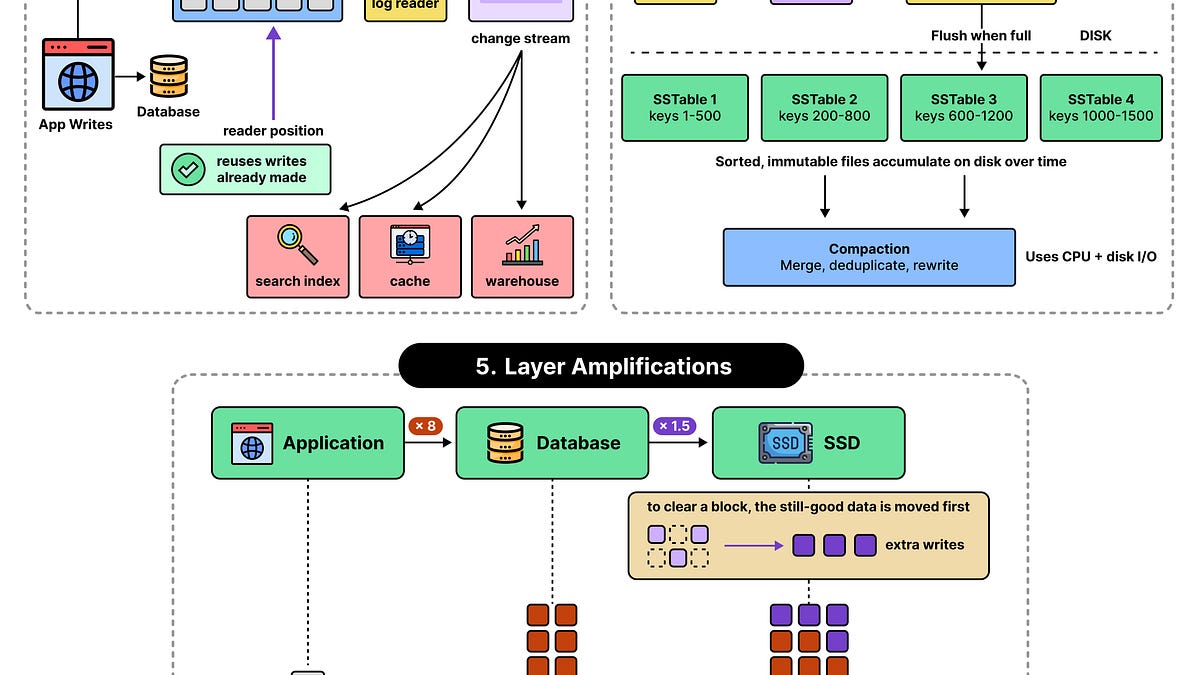
A database request’s logical action—reading or updating a record—can require substantially more physical work. The analysis introduces read, write, and space amplification as ways to measure that gap, then frames indexes, filters, B-trees, LSM trees, compression, caching, concurrency, and recovery as mechanisms that trade storage, computation, and latency. The key engineering lesson is that faster or more available systems often pay hidden costs elsewhere, so capacity and performance decisions must account for the underlying work.
Editorial summary · Publisher article
What matters
- A small logical read may require fetching many storage blocks.
- One logical update can trigger multiple physical writes.
- High availability can require substantially more space than the dataset itself.
- Indexes, filters, compression, and caching exchange resources to reduce amplification.
Context & caveats
- The supplied packet is an overview of the article, so detailed comparisons and examples from later sections are not available here.
Why this made the edition
The excerpt clearly explains a foundational systems concept and identifies concrete mechanisms across database architectures, indexes, filters, compression, caching, and availability, though the supplied material is an overview rather than the full analysis.
Source material