Reading room
Why chatbot latency depends on context, batching and cached computation
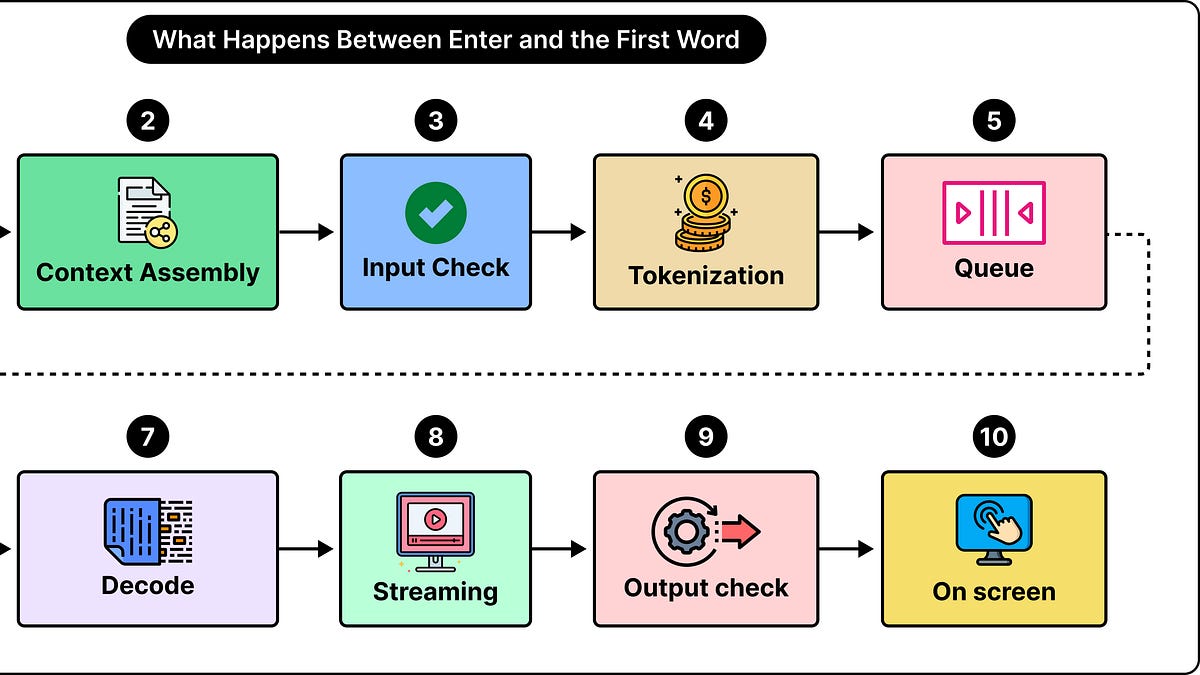
The delay before a chatbot begins answering reflects several operations: assembling context, checking input, waiting for shared hardware and processing the prompt. ByteByteGo separates that initial work from token-by-token generation, explaining why first-token latency and output speed need different measurements. It also describes how continuous batching and cached computation improve serving efficiency. For developers, the useful lesson is to manage context and reusable prefixes carefully, while recognizing that implementations and bottlenecks vary across systems.
Editorial summary · Publisher article
What matters
- Applications assemble instructions, conversation history, retrieved material and tool definitions around the user’s message.
- Continuous batching replaces completed requests without waiting for every response in a batch to finish.
- Prefix caching reuses calculations for unchanged opening content; stable instructions help preserve that reuse.
- Tool execution adds results to the model’s context and can create additional inference rounds.
Context & caveats
- This is a generalized serving explanation, not a verified description of every chatbot. Cache behavior, moderation design and performance figures depend on the implementation.
Why this made the edition
The complete explainer connects context assembly, batching, prefill, decoding and caching to practical latency and cost. References and concrete mechanisms support admission, although universal-sounding claims and loosely attributed performance figures require restraint.
Source material