AI
Uber’s MCP Gateway connects AI agents to enterprise tools with shared controls
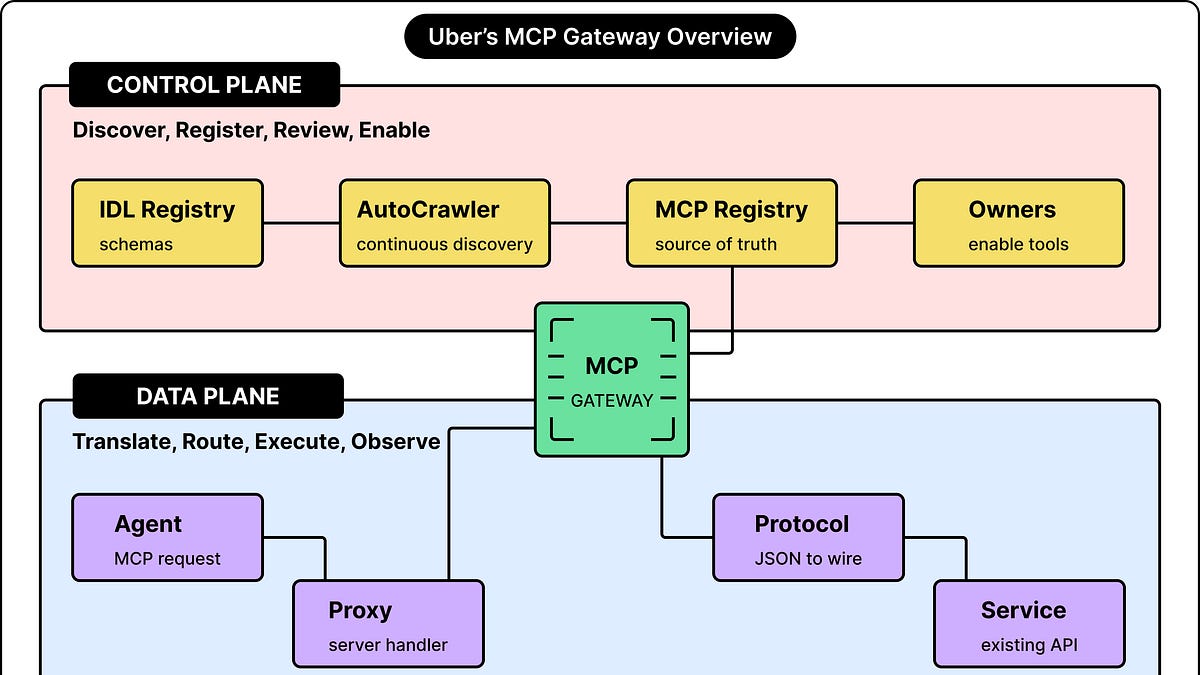
Uber’s MCP Gateway addresses the fragmentation that emerged as teams exposed internal services to AI agents through separate integrations. The platform separates a registry for tool definitions and permissions from a proxy that routes requests to HTTP, gRPC and TChannel backends. Automated discovery populates the catalog, while owners approve newly found tools before deployment. The gateway also applies caller-specific authorization, redacts sensitive responses and reduces context costs through gradual discovery, response projection and code mode.
Editorial summary · Publisher article
What matters
- The registry acts as a control plane for tool catalogs, configuration and approved changes.
- The proxy gateway translates MCP requests into the protocols used by downstream services.
- AutoCrawler derives tool schemas from existing API definitions or native MCP servers.
- Omni MCP and response projection limit tool descriptions and returned fields sent to models.
Context & caveats
- The article is a secondary account based on publicly shared details and references, not a direct Uber engineering document.
- Operational scale, latency and failure-rate results are not provided.
Why this made the edition
The article gives a coherent technical account of Uber’s gateway architecture, discovery workflow, authorization model and context-management mechanisms, while noting it is based on public material.
Source material