AI
Prompt and semantic caching cut LLM costs in different ways
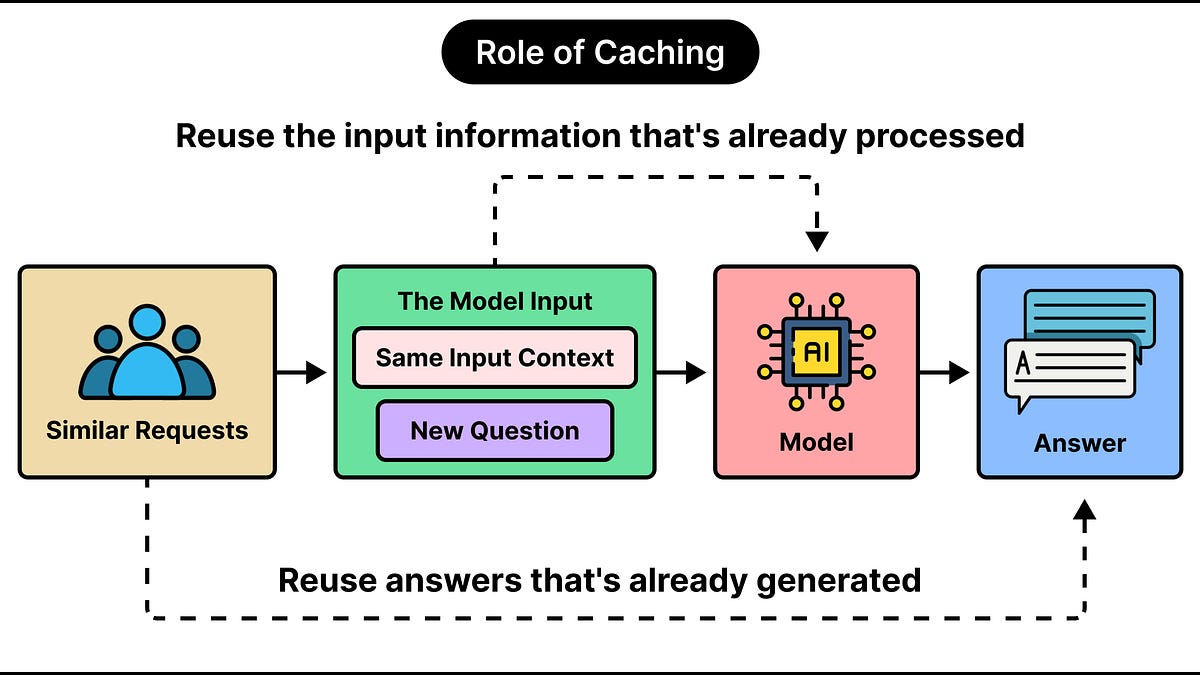
The analysis distinguishes prompt caching, which reuses computation for an identical input prefix, from semantic caching, which reuses a previous answer for a sufficiently similar request. Prompt caching depends on exact ordering and stable shared context; semantic caching can avoid a model call but risks incorrect reuse when questions differ by dates, permissions, versions or other details. The central engineering lesson is to measure correctness, freshness and scope alongside hit rates, and to combine caching with explicit invalidation.
Editorial summary · Publisher article
What matters
- Prompt caching reduces repeated input processing but does not eliminate output-generation costs.
- Semantic caching can avoid a model request, yet cache misses still incur lookup and embedding overhead.
- Similarity thresholds must be tested against near-matches involving negation, dates, plans and eligibility.
- TTL, versioning and dependency tracking are alternative approaches to invalidating stale answers.
Two different reuse opportunities
Prompt caching reuses the model’s processed shared prefix, while semantic caching attempts to reuse a completed answer for a paraphrased request.
Correctness is harder than similarity
Near-identical questions can require different answers when customer context, product version, timing or permissions change, so metadata filters and evaluation sets are necessary.
Context & caveats
- The article is an explanatory analysis based partly on publicly shared provider details; pricing and cache behavior vary by model and provider.
Why this made the edition
This is a detailed, transparent technical analysis that explains the mechanisms, cost tradeoffs and failure modes of prompt and semantic caching, including freshness and correctness risks.
Source material