AI
Theo argues that engineers should prompt for outcomes and build the primitives agents need
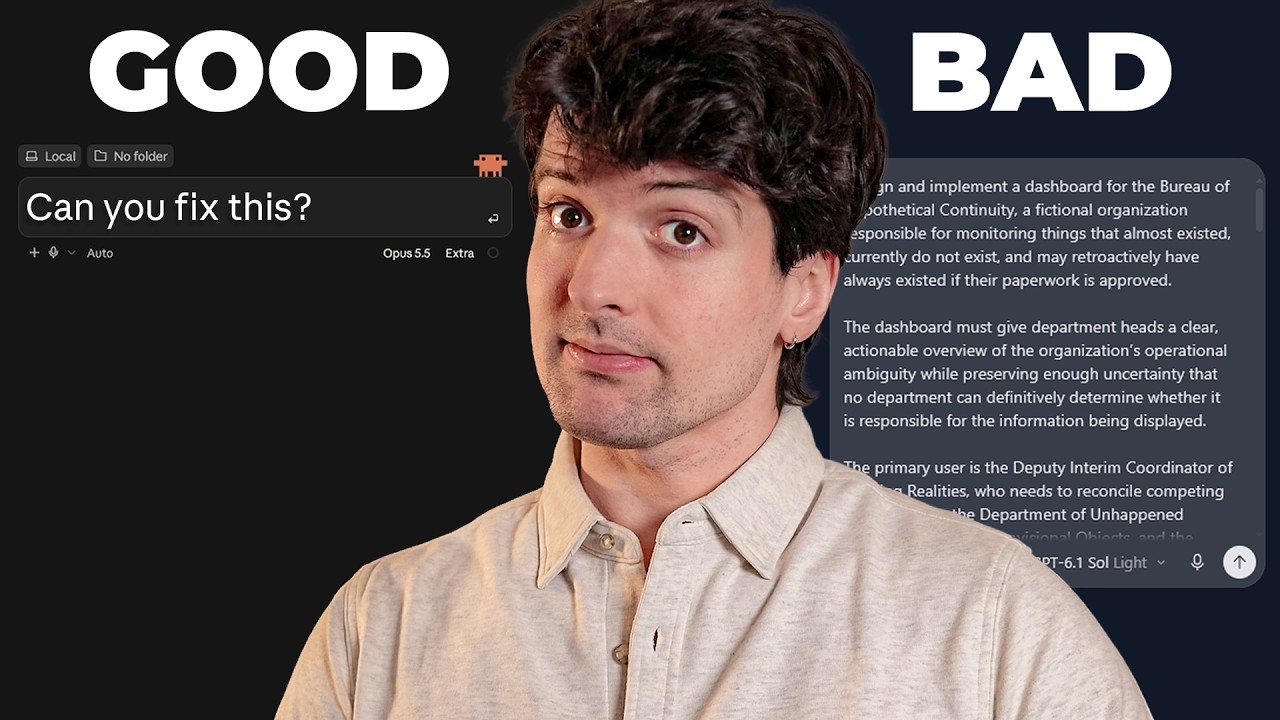
Theo argues that engineers often overbuild features because they remain trapped in conventional software workflows. His alternative is to ask agents directly for useful outcomes, such as analyzing tool-call history, generating visualizations or triaging failures, then build the data access, interfaces and safeguards that make those requests reliable. He presents T3 Code examples, including a prompt-driven support flow and connected email and cloud systems, while acknowledging that deeper engineering remains necessary underneath.
Editorial summary · Public video captions
What matters
- Prompting can replace bespoke features when the desired result is information or a dynamic workflow.
- A T3 Code triage command became a short launcher plus a detailed agent playbook instead of a large branching feature.
- The most valuable engineering shifts toward primitives, data pipes, access controls and agent-readable interfaces.
- Theo says agents should be judged by the systems they can operate within, not only by their ability to generate code.
Context & caveats
- The argument is a creator’s analysis and relies heavily on personal examples; sponsor material and promotional claims are excluded from the summary.
Why this made the edition
The complete transcript provides a detailed practitioner argument, concrete examples and implementation lessons about treating agents as interfaces to systems rather than merely coding assistants.
Source material