AI
Amazon’s million-robot workforce is reshaping warehouse productivity and human risk
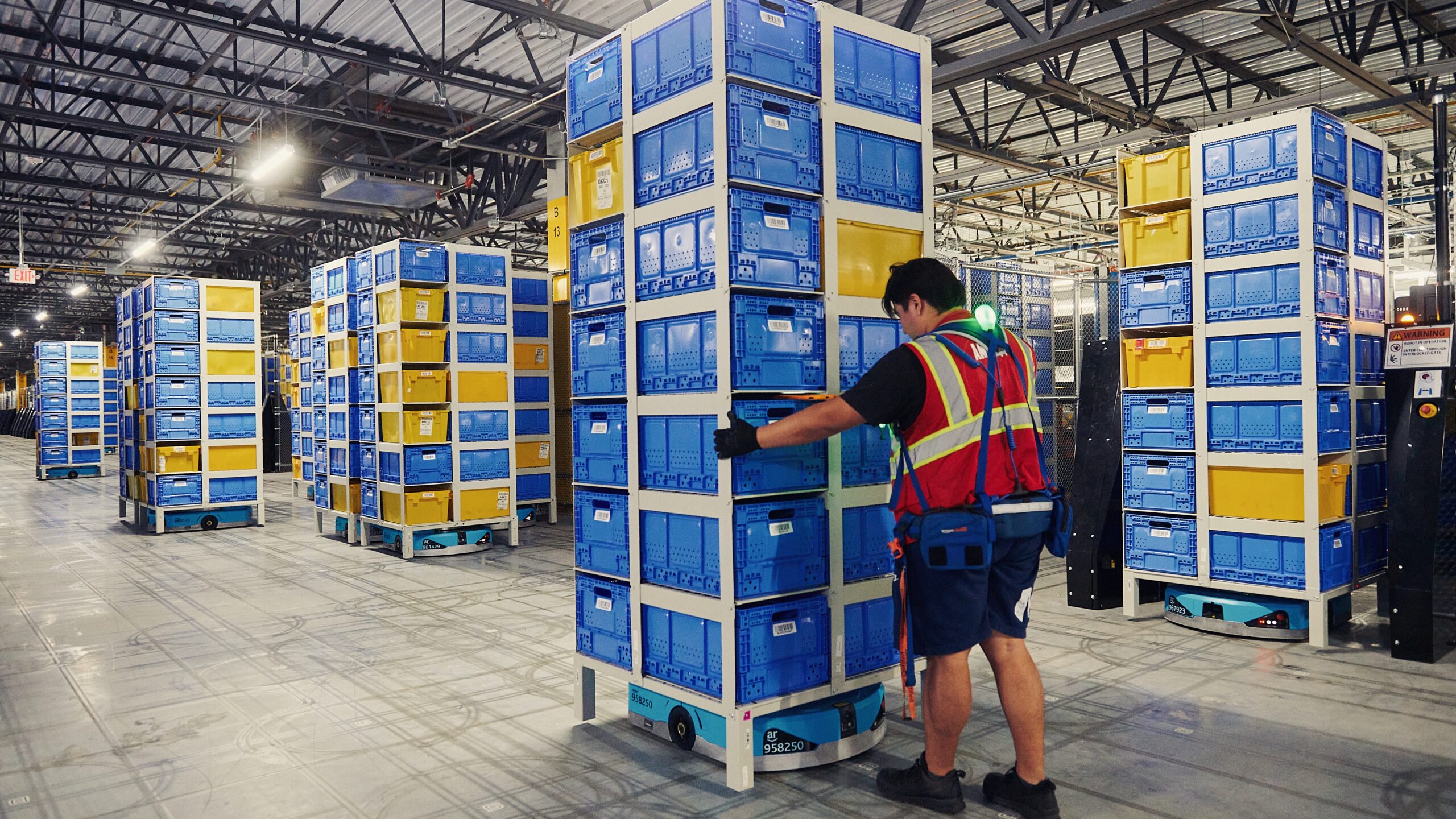
Amazon operates more than one million warehouse robots while employing over 1.5 million people, and it is expanding robotic arms, foundation models and tactile sensing to handle increasingly varied products. The technology can reduce heavy or awkward work and improve picking efficiency, but independent research and labor investigations find a tradeoff: robotic warehouses have fewer severe injuries yet more repetitive-strain injuries, apparently linked to faster work rates. Amazon disputes older findings and cites broad improvements in its injury metrics.
Editorial summary · Publisher article
What matters
- Amazon’s fleet is dominated by mobile robots, while robotic arms such as Robin, Cardinal, Sparrow and Vulcan address picking, packing and storage tasks.
- Machine learning improved Robin’s picking success from 92.28 percent to 93.73 percent in one reported trial.
- Vulcan combines vision with force feedback and is expected to scale more widely in 2027.
- A 2025 study found 40 percent fewer severe injuries but 77 percent more less-severe repetitive-strain injuries in robotic facilities.
- Amazon says advanced robotics facilities require more maintenance and engineering roles, while internal strategy documents reportedly projected lower future hiring needs.
Why the technology is scaling
Amazon’s newer systems use foundation models to recognize hundreds of millions of product types, generalize across robotic hardware and predict traffic among mobile machines. Tactile sensing addresses tasks that vision and suction handle poorly, such as inserting or removing items from densely packed storage pods.
The worker-safety tradeoff
Company representatives say robots remove ladder work and other physically demanding tasks. Independent researchers and labor groups report a more mixed result: severe injuries fell in robotic facilities, but repetitive strains rose as automated systems increased expected pick rates. Amazon says its cited studies rely on older data and points to improving company-wide injury rates.
Context & caveats
- Several injury findings rely on data from 2016 through 2020, and Amazon disputes their applicability to newer systems.
- Claims about future hiring reductions come from internal documents attributed to one group and were disputed by Amazon.
Why this made the edition
The report combines company evidence, technical detail, independent research and labor criticism to explain both the operational gains and worker-safety tradeoffs of Amazon’s expanding robotics program.
Source material