Reading room
Machine-payment protocols could let AI agents buy services without human checkout flows
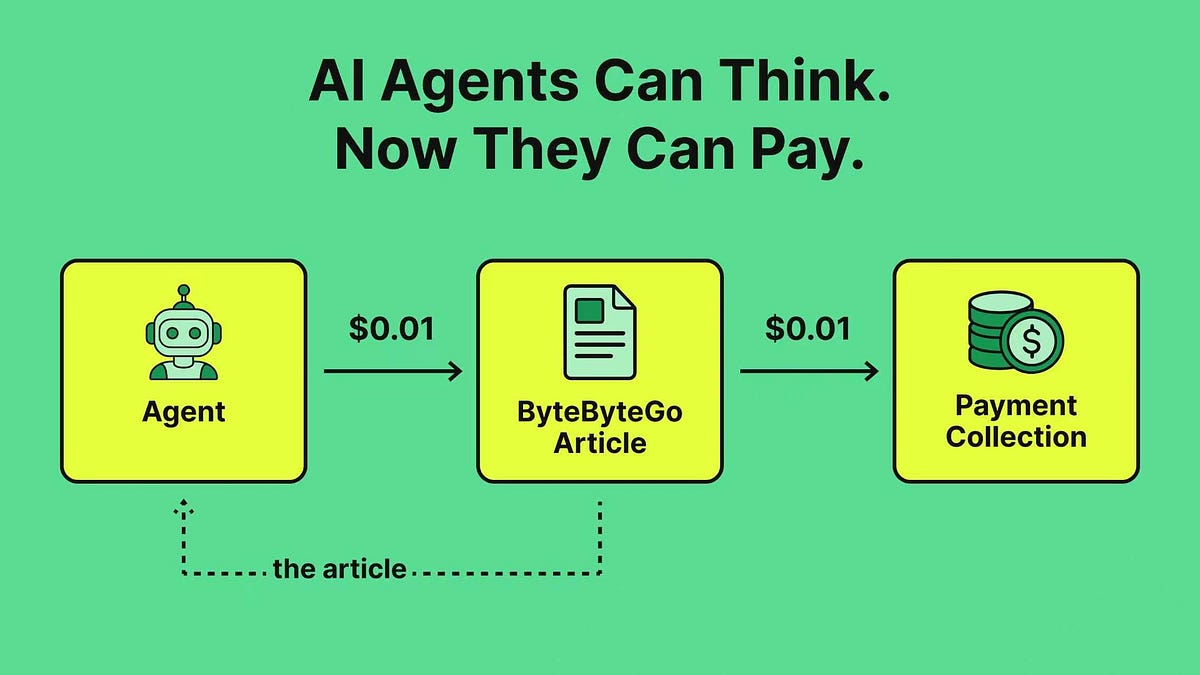
Machine Payments Protocol, co-authored by Stripe and Tempo, defines a standard HTTP exchange in which an agent receives payment terms, authorizes a bounded transaction and obtains a paid resource with a receipt. Sessions can aggregate signed IOUs to make very small purchases economical. The model could support agent-to-service commerce, but removing accounts also removes identity, customer history and established dispute mechanisms. The article reports roughly 30,000 transactions by August 2026, a small early sample rather than proof of broad adoption.
Editorial summary · Publisher article
What matters
- MPP uses HTTP 402 responses and standardized challenge, credential and receipt objects for payment negotiation and proof.
- Delegated keys can impose spending caps, expiry dates, recipient limits and deployment-level revocation.
- Session deposits and signed IOUs reduce settlement costs for repeated low-value requests.
- The protocol does not define a complete refund flow, while identity and abuse controls remain separate layers.
Why sessions matter
Settling every tiny request separately can cost more than the request itself. MPP sessions let an agent commit funds up front while the seller accumulates signed claims and settles once.
The missing customer relationship
A valid payment proves control of a key but not the identity, organization or history of the buyer. That weakens familiar tools for support, abuse prevention and refunds.
Context & caveats
- The article is a publisher analysis based substantially on Stripe, Tempo and protocol materials; its adoption figure is presented as an early snapshot.
Why this made the edition
Detailed technical analysis explains MPP’s protocol flow, session-based micropayments, delegated spending controls and unresolved identity, abuse and refund problems. It relies heavily on participant and vendor materials, so the protocol’s adoption and performance claims remain provisional.
Source material