AI
Longer context windows do not guarantee that models will use every fact reliably
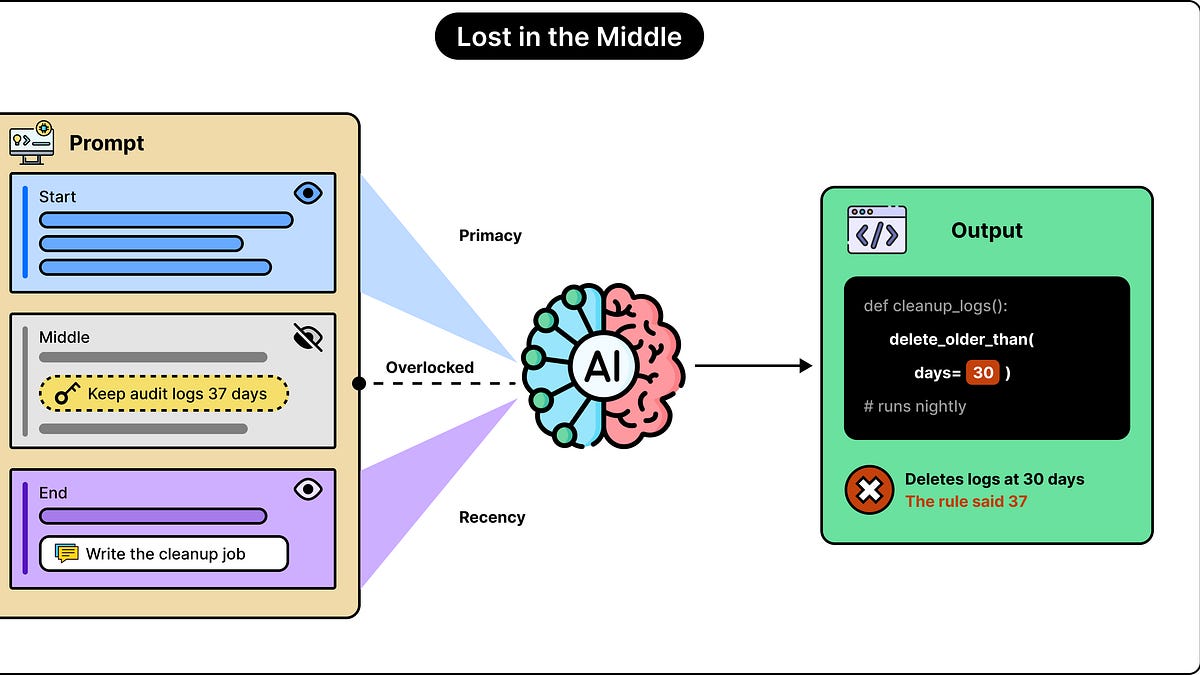
Large language models can overlook information located in the middle of a long prompt even when the material fits within the advertised context window. The analysis links this tendency to how transformer attention and causal processing combine information, while stressing that the effect varies by model and task. It recommends clearer prompt organization, pruning irrelevant context and retrieval systems, but cautions that none guarantees reliability because retrieval can miss exceptions and summaries can discard necessary detail.
Editorial summary · Publisher article
What matters
- Research cited in the analysis found a U-shaped pattern, with stronger performance near the beginning and end than in the middle.
- Maximum context capacity differs from the smaller amount of context a model can use reliably for a particular task.
- Causal masking does not directly hide middle tokens from the final answer; the failure concerns representation and influence.
- Prompt structure, focused retrieval and careful context selection can reduce errors but require model-specific evaluation.
Context & caveats
- The analysis presents general tendencies, not a universal failure rate for every model or task.
Why this made the edition
A detailed technical analysis explains the lost-in-the-middle effect, distinguishes it from retrieval and truncation failures, and gives practical mitigation strategies with important qualifications.
Source material