AI
Model routing can lower AI costs when evaluation and escalation stay efficient
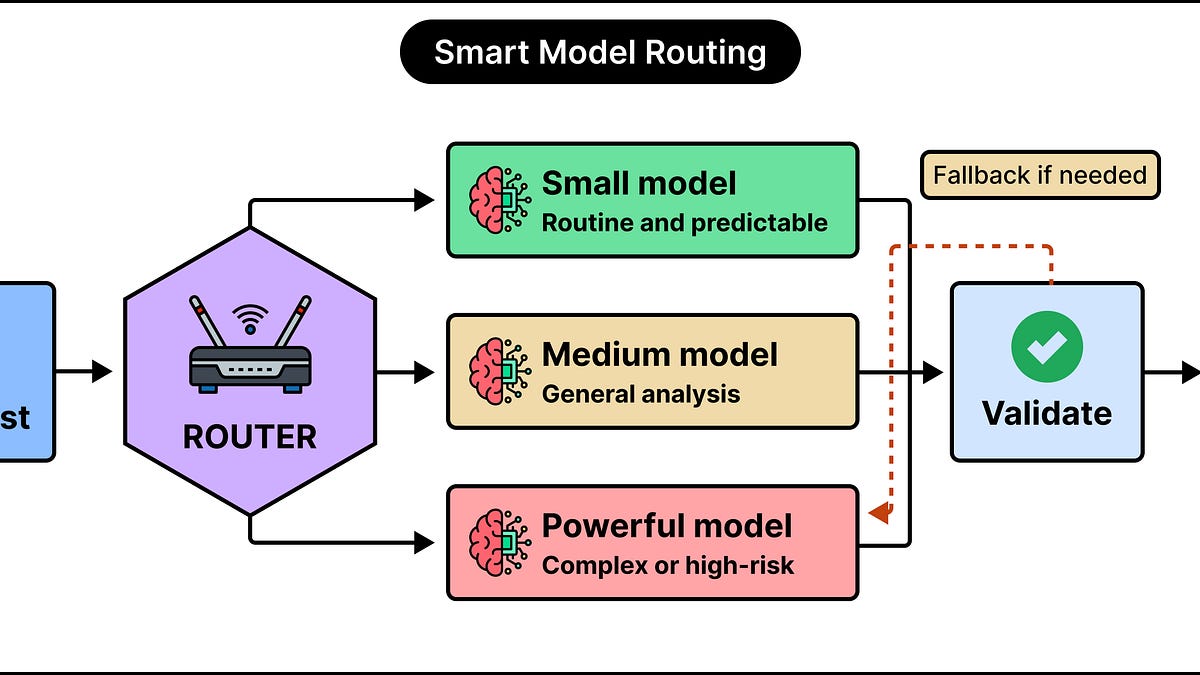
Application-level model routing can reduce AI spending by matching requests to models with different capabilities and prices. ByteByteGo explains classification routers, cheaper-model cascades, semantic routing and routing learned from evaluated requests. Its illustrative workload costs 11.25% of sending everything to the strongest model, before additional routing and evaluation costs. The practical argument is conditional: savings depend on workload mix, reliable quality checks and escalation, while failed attempts and expensive evaluators can erase the benefit.
Editorial summary · Publisher article
What matters
- Task type, risk, context and output constraints provide better routing signals than request length alone.
- Cascades work best when outputs can be checked through deterministic validation or tests.
- Semantic similarity identifies subject matter more reliably than reasoning difficulty.
- Routing needs reevaluation when models, prices, prompts or traffic change.
Context & caveats
- The near-tenfold saving is a hypothetical calculation, not a measured production outcome.
- A structurally valid response does not necessarily establish that its contents are correct.
Why this made the edition
A complete practitioner explainer provides transparent hypothetical arithmetic, multiple implementation strategies and substantial failure-mode discussion; its savings headline is conditional rather than an observed result.
Source material